Archives for category: Nourishing hope

Let food be thy medicine and medicine be thy food. Hippocrates
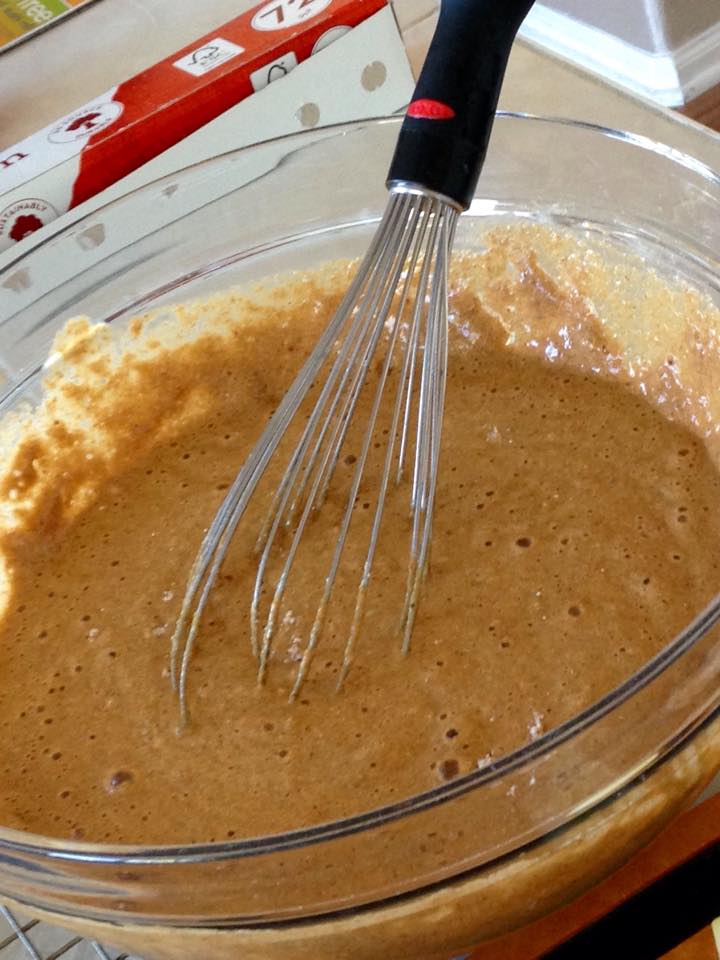
whisk

Last Monday, as I sat in my therapist’s office, I was feeling impatient. Five months after my father’s suicide, I don’t feel better. It is like trudging through quicksand, day by day, this journey through grief. Don’t get me wrong, I laugh, I smile, I spend my days in the land of the living. But my heart, my soul, what lies beneath the surface, is still riddled with pain.

I try to follow the loving advice I am given. I do.
“Be kind to yourself.”
“Be patient with yourself.’
Not easy, since anyone who knows me, knows that patience is often not a virtue I possess in great quantity. Still, I do try.

It’s hard, I tell my therapist. I don’t feel like me. At least I don’t feel like the me I was before.
Before the call.
Before the words.
Before my father’s suicide.
I do know that I will never be that person again. When trauma storms into your life and leaves behind an epic and chaotic aftermath of pain, shock, overwhelming grief, destruction and despair, you can’t emerge from it unscathed, unchanged, unaltered. Like the images of wreckage we see on our television screens, when Mother Nature unleashes her fury, so to it is with suicide.

It is hard, uncomfortable, challenging, when who we are in the world is not who we want to be. It’s like wearing clothes that are two sizes too big, or shoes that are too small. It doesn’t fit.

What I want is to feel better, to not hurt anymore, to not feel like there is a brick that lays upon my heart each and every day. I want to fast forward to the part where healing takes place. Where I can emerge as a me that doesn’t hurt on a daily basis. I want to sprint ahead to the finish line, even though I know no such line even exists. There is no endpoint to this process. The journey will change, the ebb and flow of the tide will, I pray, dull the edges of the pain. But, as my very wise therapist said to me, you never make peace with this kind of loss. You will never accept it. You will never be okay with it. How could you? She’s right. No, one day, she tells me, you simply learn how to live with it.

It gives me comfort too when she puts my loss into a perspective that I can better understand. She calls it, turning the crystal. Traumatic loss is like oil and water, she explains to me. The water, the under layer, is the sense of sadness, loss and grief that you would feel no matter the circumstances. If my father had lived to a ripe old age and died of natural causes, I would still miss him, cry for him, yearn for his presence on earth, mourn his absence and struggle with the finality of his being gone. But suicide loss, puts a top layer of trauma, oil over the grief. That is the layer that demands your attention in the aftermath. That is the layer that keeps you up at night, pulls and pushes at you, taking all of your energy, weighing you down with the unanswerable questions, the regret, the inability to make sense out of something so utterly senseless. Five months in, she tells me, I am still dealing with that top layer. That is a long and hard journey. We’ve not even begun to get deep into it after five months. No, we are still skimming the surface, and we’ve surely not even begun to permeate the grief that I must grapple with as well.

This journey, where I stand now in the acute stages of traumatic loss, is the hardest one I’ve ever had to take. And I feel like I follow a frustrating rhythm…
One step forward
Two steps back
I feel like I am stuck, despite my best efforts to keep on moving.

And so my therapist asked me a simple question. What is one thing you were not able to do when your father died, that you are now able to do again? I thought for a moment, and the answer came; cooking.

Prior to my father’s death, my Facebook page was often filled with the healthy, delicious, culinary adventures of my time in the kitchen. I loved to cook. I did it with great passion, allowing my creativity to flow, deeply immersed in the meditative process that cooking is to me. Serving up healthy, wholesome and tasty food to those that I love most in this world, filled me up.

But when my father died, that changed. I walked through most days in a fog. I ate what people put in front of me, but I didn’t really taste anything. I ate, because I knew that I needed to; no more and no less. The meals prepared by others were a godsend to my family. And when they stopped, I stood in the kitchen and looked at my folders full of recipes, the books that lined my shelf, the pantry full of ingredients and I felt overwhelmed. I cried. I couldn’t do it. It felt too hard.

After a few weeks had passed, I began to try again. Before I could produce a four course meal with ease, but now I aimed simply to complete one recipe. One recipe that would allow me to feed my precious family. But I felt no joy in it. I cooked from necessity, and because I needed to. I took no photos, shared no recipes, took no pride in what I put on the plate. Cooking, something once so full of passion for me, became simply a means to an end.

So, as I contemplated that question, I thought about arriving in Colorado. Once again, so blessed to be fed by others in our new community. I was now doubly overwhelmed, dealing in the midst of such profound trauma & grief, with a move across the country. But a few weeks later, when my children arrived in Colorado; the dishes all unpacked, the meals no longer being delivered, the cooking once again resumed.

It still felt robotic. The utensils felt heavy in my hand, the recipes felt strange to me. The confidence I once had in my ability to tweak, change or adapt a recipe was gone. If I could not follow it line by line, I did not cook it. On top of that, I had new elements to contend with; the altitude and the electric oven only furthered my reluctance.

But here’s the thing….

Now, five months after my father’s suicide, I have rekindled my passion for food & cooking. My Facebook page is filled with photos of what I’ve created, recipes I’ve tweaked and healthy, wholesome tips that I offer to my friends. I’ve mastered the electric oven, adapted for altitude, and I have rediscovered the, “Joy of Cooking.” I don’t know exactly when it happened. I don’t know the turning point. I guess I simply didn’t notice the shift when it took place.

That was her very point, my very wise therapist. Sometimes we don’t notice the small healing moments that take place. Perhaps we don’t even feel them when they happen. But, she helped me to see, they are happening.

The bigger elements of healing, simply put, those are going to take a lot longer. Trudging through the quicksand of suicide loss is not going to get easier anytime soon. And, as with any recipe, you can’t skip steps or omit the important and necessary ingredients. The recipe for healing is no different. Though I wish there were a shortcut.

But in the meantime, I left knowing that some part of me had returned in these past five months. Who I will be when I emerge from this, I do not know. I pray I will be stronger, that I will find purpose & meaning in the scars I now bear. I hope the best parts of me will remain, and perhaps even be heightened by my loss. I hope one day I won’t carry so much heaviness, that I will make be able to stop asking the unanswerable questions. I hope I’ll be able to forgive God, my father, myself. I hope I’ll be able to think about my father and smile.

But for now, I’ll take some solace in the creativity of the spirit, the culinary meditation that I find in my kitchen. And I’ll be grateful for the flavor, color and ability to savor a sweet bite, that it brings to my days. Sometimes I cook with joy, sometimes I cook with tears, sometimes with wild abandon & others with controlled precision. Sometimes I cook to lose myself, sometimes I cook to find myself. Sometimes I taste the salt in my tears, sometimes I forget the bitterness. I whisk, I fold, I mix, I knead and in it, I find some healing… even if I don’t know it.

All sorrows are less with bread. Miguel de Cervantes Saavedra
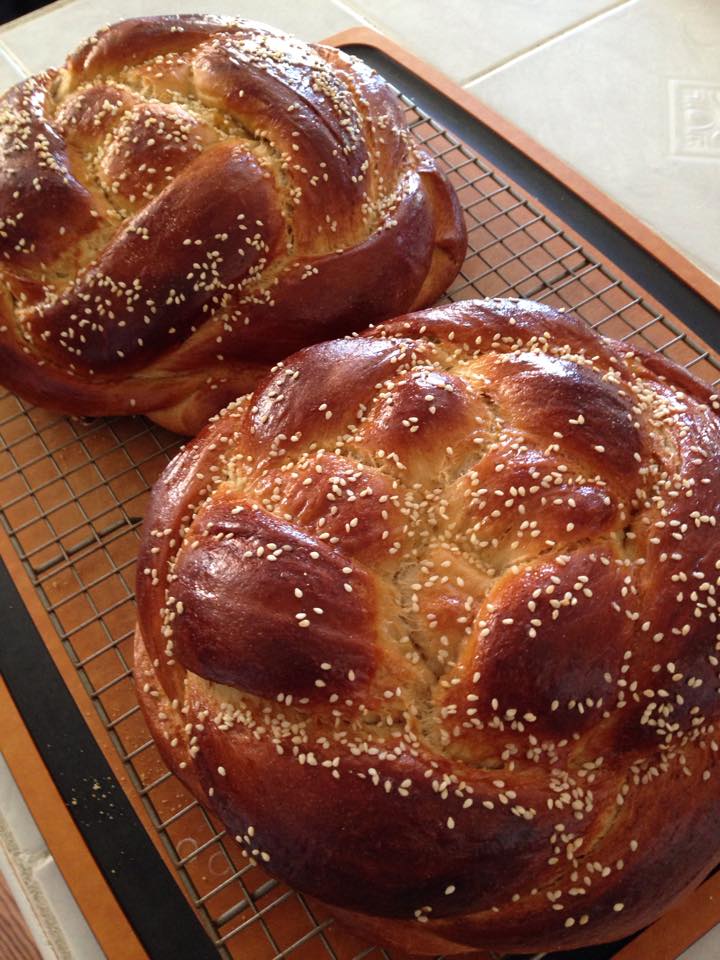
challah

shofar two

High Holiday services were brutal for me. Unusual for the wife of the rabbi to say out loud, I know. But there it is. Five months after my father’s suicide, the liturgy of the holidays felt like a vat of salt was being poured into my still open wounds.

We recite Unetanah Tokef….
On Rosh Hashanah it is inscribed,
And on Yom Kippur it is sealed.
How many shall pass away and how many shall be born,
Who shall live and who shall die,
Who shall reach the end of his days and who shall not,
Who shall perish by water and who by fire,
Who by sword and who by wild beast,
Who by famine and who by thirst,
Who by earthquake and who by plague,
Who by strangulation and who by stoning,
Who shall have rest and who shall wander,
Who shall be at peace and who shall be pursued,
Who shall be at rest and who shall be tormented,
Who shall be exalted and who shall be brought low,
Who shall become rich and who shall be impoverished.
But repentance, prayer and righteousness avert the severe decree.

As a still very new, and grieving survivor of suicide loss I cannot possibly utter these words. Though I do not believe in an all powerful God, an intervening God, the words, the liturgy of these Holy Days reverberates with that kind of Divine Image. Recited around me, carried to the heavens in the voice of a congregation, I feel angry at God, betrayed, let down. I am unable to pray. I simply stand and cry, and at other times I leave the sanctuary overcome by grief.

Five months ago my father took his own life. There are no words to describe the pain his death, his choice, has left behind. On a cerebral level, I can recognize that it was his illness, the depression & anxiety that had taken hold of his soul, that led him to his death. On an emotional level I feel abandoned, angry, traumatized, profoundly sad and grappling with the many complex layers of this loss.

I want to know if God watched him do it.
I want to know if God, or the angels cried out.
When Abraham was about to sacrifice Isaac, God’s Angels cried out to stop him.
Where were they when my father died alone, in the basement of the home I grew up in?
I want to know why my father felt unworthy of inscription in
The Book of Life.
His story was not done.
Surely this could not be God’s
decree.

U’fros Aleinu Sukkat Sh’omecha
Spread Over Us Your Shelter of Peace
How many times have I prayed these words?
Mi shebeirach imoteinu
M’kor habracha l’avoteinu

Bless those in need of healing with refuah sh’leimah
The renewal of body, the renewal of spirit

And how many times did I pray these words, thinking of my father’s struggles and wanting so desperately to help him once again find peace.

And now, the holiest of days in our Jewish calendar. A time of reflection, atonement, renewal. A time to meet God with openness, with honesty, with confession and with grace. And I can’t.

We are in this complex dance right now God and I. As I lash out in anger and bewilderment, I beg for peace and comfort. Like picking the flowers off of the petal.

I need you
I need you not
I forgive you
I forgive you not
I pray to you
I pray to you not
I turn to you
I turn to you not

It would have been easier not to go. It was offered to me. Friends, family, even my beloved husband offered me the out. If it is too hard, if it hurts, if you are suffering, do not come to services this year. It’s okay. God understands. That is what I was told. So much love and concern surrounding me. So many wanting to hold me up. So many wanting to minimize the pain I’m enduring. It would be okay this year to do “Jewish lite.”

But I wanted to be with my family.
I wanted to support my husband on his first High Holy Days here in Colorado.
It made sense, right?
But it wasn’t really what drew me to go.
At least not in full.

I couldn’t name it, this other pull. I then I read an article that a friend had shared with me. In it there was a poem by Aaron Zeitlin.

Praise me, says God, and I will know that you love me.
Curse me, says God, and I will know that you love me.
Praise me or curse me
And I will know that you love me.

Sing out my graces, says God,
Raise your fist against me and revile, says God.
Sing out graces or revile,
Reviling is also a kind of praise,
says God.

But if you sit fenced off in your apathy,
says God,
If you sit entrenched in: “I don’t give a hang,” says God,
If you look at the stars and yawn,
If you see suffering and don’t cry out,
If you don’t praise and you don’t revile,
Then I created you in vain, says God.

And there it was.
I went to sevices on Rosh Hashanah and on the evening of Yom Kippur to show God that I was still in this relationship. I showed up to offer God the truest and most authentic prayer I had, my tears; and in that regard I prayed without end. I showed up to deliver this message.

I am angry at you God.
Perhaps it is unfair, misguided anger, but I need a place to put it.
My father’s end is unjust, unacceptable.
It feels like an abomination.
And I want to know where you were.
Where was your compassion?
Where was his peace?
And I want to know why my own prayers for comfort do so little to ease my own pain?
I want to know so many things. I want to yell and I want to cry. I want to speak and I want to remain silent. I want to turn away from you and I want to turn towards you.
But I’m here, in your house.
I’ve lived through estrangement before.
I will not do it again.

In “Vayishiah” Jacob wrestles with the angel. His name is changed to Israel
which means
to struggle with God.

I could not do it all. I went to services on erev Rosh Hashanah and on the first day. I could not bear to stand through the liturgy, or run from it another day. And I went to services on Kol Nidre, but I could not return for the remainder of the holiday. But the point of it all is this…

I showed up.
Though my knees threatened to buckle and my feet carried me to and from the sanctuary and back more times than I can count; I showed up.
In my silence and through my tears, tissue after tissue; I reviled and admonished God.
In my pain and in my anguish, in the sobs that felt as if they came from my soul; I forced myself to turn towards God.
I struggled.

To stay home for it all would have been easier.
To turn my back would have been easier.

But God and I have a long journey ahead of us.
And we’ve shared a long journey past.
And I don’t know much right now.
The answers I seek escape me.
But I do know this…

I showed up.
Because I want God in my life.
Faith is my anchor, even when I feel lost at sea.
God’s love is steadfast
Even when I find it hard to receive.
I love God.
And in my anger & my pain;
deep in my soul
I know God loves me.
And I know God loved my father.
My father is with God now.
And my most fervent prayer
is that he is at peace.
unetanah_tokef_083013_820

DSCN0664

There is nothing in the world so much like prayer as music is. (William P. Merrill)

Once, we didn’t know if she would ever utter a complete & coherent sentence.
Once, we couldn’t bring her into a room full of people & stimuli-knowing it would overwhelm her senses.
Once we didn’t know if she would be able to make & sustain friendships.
Once we didn’t know if she would ever reach or achieve the milestone of becoming a Bat Mitzvah.
Once we were afraid to hope too much, ask for too much, pray for too much.
Once it seemed there wasn’t room for her in our faith. She would exist on the periphary, never being able to believe it truly belonged to her.
Once we didn’t know that we could teach her to cut with a scissor, let alone make beautiful music on an instrument.
Once, the simple act of drinking from a straw seemed too much to ask of her lips, her mouth. The only songs we might hear were those she mimicked, memorized from her favorite TV shows. Rote melodies and words….
Once, we heard the word autism and for a brief moment, our world came to a stand still.
But, we loved her too much to remain in a place of helplessness. We owed her so much more than that.
So once, we fought for her. And she fought alongside of us. We immersed her in therapies, and she displayed a fortitude & a perseverance that, in the company of that support, brought her forward, tiny step by tiny step.
Once, the world overwhelmed her. A clown, a bright gathering of balloons, the sounds of a crowded space. But we did not retreat. She allowed us to slowly expand her world, safely, with trust… inch by inch.
Once, she carved out an entry way into her faith, embracing it as her own, determined that she would have a place, amongst her peers.
Once, we began letting go, allowing her to try, to stumble, to feel her way through, so she would know autism did not own her, it simply inhabited her.
Once…. once we didn’t see her standing on the bimah, guitar in hand, surrounded by her peers, leading a congregation in prayer & song.
Once we didn’t see that smile, full of pride… her smile, our smiles.
Once, our hearts broke–sometimes they still do.
Autism has changed her journey. Not simply once, but forever.
Once we didn’t know where that journey would take her. Today, we still don’t.
So we take in the moments… always.
And last night, as we watched a very special song leader, our hearts filled with pride. We kvelled and turned to each other, my husband and I.
“Remember when we never thought this would be possible?”
Once the word never occupied a space too painful to bear. We tucked it away, choosing instead to focus on maybe, perhaps, one day
And on this Sabbath eve, we quietly revisited the word never.
Never underestimate her.
Never give up on her.
Never forget the quiet courage she displays each & every day.
Never be too afraid to hope, to dream.
Never stop giving her the tools, the chances, the opportunities.
And never forget the moments, when we get to witness the incredible blessing of watching her do, what once we thought could never be done.
In prayer, and in song… and in watching her, her love of music, her love of faith, her love of Jewish community, she shared with us a gift. It’s her gift.
And that we will never give up on.

Yael 3
Never give up, for that is just the place and time, that the tide will turn. (Harriet Beecher Stowe)