Archives for category: Coping with Suicide

faith


Dear God,

I have been angry at you for a long time now. Even as I have moved forward on this grief journey, my faith & willingness to trust in you has remained stagnant. I forgave my father for leaving me, for leaving our family, the way that he did. I came to accept that it was the illnesses of depression & anxiety that metastasized into his soul and his spirit, blinding him to anything but his distorted sense of self and the pain that he carried. His soul withered under the constant barrage of falsehoods that depression shouted at him, a daily mantra that grew so loud, it drowned out the voices of love that surrounded him. His inner light flickered, growing smaller & dimmer, until it was extinguished by the anxiety that consumed him. It wasn’t his fault. It wasn’t really his choice. He wanted only to stop the pain.

But you see God, the soul that I speak of, the spirit and the light within him, those are the very things I wanted to believe that you would tend to. So many of the prayers that I uttered to you in the course of a lifetime reflected that belief, that sense of faith that though you did not control the world with a divine hand, you could, when called upon, lift up the fallen and tend to the weary. The soul was within your purview. And reconciling that belief with the way in which I lost my father has felt next to impossible.

And, let’s be real, it has been no secret to you that I have maintained the need to place blame for this senseless tragedy on someone, somewhere, to lay it squarely on the shoulders of an entity that could carry it.  And you simply fit that bill. I don’t know that it was a conscious choice in my part, perhaps it grew out of the conflicting feelings of the God that I was called upon to exalt and praise in prayer, and the God that I could not find or feel in my deepest moments of trauma. I couldn’t reconcile those two things and it made me angry to have to work so hard at trying to. So it became easier not to try.

Perhaps I laid blame on you because I knew that you could take it. You could carry my rage, my outbursts, my railing against you and you wouldn’t leave. You would bear it. You would wait for me. Somewhere deep inside, maybe I believed that. So why not saddle you with the blame?  But the blame became too high an obstacle.

And I’ll confess God, I don’t even know if my father called out to you. He was a pragmatic man, not deeply spiritual, and it is possible that he never once turned to you in prayer as the darkness descended upon him. But what does that mean? It doesn’t make it easier to let go of the anger, because surely you could see his pain. Must we ask before your loving presence comes to us? These are questions with which I have struggled. These are the questions that bring static into my fractured sense of faith. They are the impediment, the stumbling block when I have tried to find my way back to you. They are questions without answers.

I wrote recently of that very thing, finding my way back to you. The broken pieces I have carried with me, were laid down in front of you and you implored me to entrust some of my pain to you. And I did. The tenuous first steps of our reconciliation had begun, with a single baby step; trusting a piece of me to you.

I still do not trust the universe God. I don’t know that I will ever trust in it again. Life as I knew it was shattered with one phone call. And I do not trust in the ground beneath my feet, for fear that it will shift once again. But I have found the strength to push through that sense of distrust, to not allow it to define me or narrow my experiences in the world. I may inch forward with trepidation, but my feet still carry me toward life. And somewhere along the way, in this past week, I found myself ready to forgive you.

I don’t want to blame you anymore God. You loved him. He is with you now and I want to believe, no I choose to believe, that you have tended to his wounded soul and brought him peace. He is held in your loving embrace. He is not alone. And when he weeps at the devastation his suicide caused to those he loved the most, you wipe his tears.

I still do not know how to talk to you God. I do not know if prayer will ever be the same for me. But I suppose it will take time to figure out our new relationship with one another. The language of reconciliation is sometimes difficult to decipher. So I continue to entrust you with my pain, bit by bit and piece by piece. And I open myself up to the blessings that you have instilled within me; strength, resilience, hope, courage and an abiding love of life. You have surrounded me with a family and circle of friends that embody your divine spirit. They are all the reminder that I need that never once, have you turned away from me.

Forgiveness is about letting go, and I no longer want to carry with me anger toward you. It’s too hard and it hurts too much. I need you in my life God. My father died of an illness. It will never make sense and I will never make peace with his suicide. But I can learn to live with it, ever so slowly. And you and I can find our new normal one breath, one prayer, one letter at a time. Our covenant is weathered, cracked and touched by the most painful elements of life. But I see now, that it is not broken.

For too long I have felt shattered. I tenuously set the fractured pieces in place. I tend to them so they may heal. I strive toward sh’lemut (wholeness) and shalom (peace). And neither is possible without you in my life. Rumi said, “The wound is the place where God enters you.” So I open myself up anew to receiving your divine light and love.

Adonai is close to the brokenhearted, And helps those crushed in spirit. Psalm 34:19

I will admit that it was hard to revisit that morning, when I learned of my father’s suicide while standing in the middle of Whole Foods. But I am moved and incredibly honored to have the chance to tell my story out loud as part of this radio interview with Erika Lantz of NPR Boston’s Kind World series. It is my fervent prayer that my words have reached those strangers in one form or another. And I hope that through my voice, the voice of my friend Pam and the retelling of that dark morning, I can help to further humanize the truth of suicide loss and the pain that we, the survivors, must endure.

Here is the link to the radio interview:

WBUR Boston’s NPR News Station Kind World #24: Imprint

Today I am sharing some reflections on one of the final and most heartfelt conversations that I had with my father, just before his suicide.  Words that bring me some understanding, even if they can’t ease the pain.

“My father’s suicide was not a selfish act. It was not the act of a coward. It was the act of a man who was in agony and didn’t want to hurt anymore….”

To read more visit Our Side of Suicide


Lowell BM pic

Dear Facebook,

I know it is coming.  On April 20th, you will remind me of what I posted “One Year Ago Today.” But I need no reminder. I have been learning to live with and accept this truth every day since I wrote it.

These are the posts that announced my father’s death…

My Father’s Death (written 4/20/15)

Early this morning, my father lost his battle with mental illness. My heart is broken. May his memory be for an eternal & abiding blessing… and may he know how grateful I was for the gifts of reconciliation & healing–I got these last few years with my father, and that is a gift I will forever be grateful for. I will miss him more than words can say… I only wish I could tell him how much he meant to me, one last time. To hear his voice, to say I love you–and if only I had another chance to remind him-that it would get better, to hang on to hope even if only by his fingertips–but instead, I travel with my family to New York, to say goodbye to a beloved father, father-in-law, grandfather, friend, brother and husband–and to return his soul to God. I love you daddy!

He is Gone (4/20/15)

My beloved father Lowell Jay Herman. I want just one more moment–one more hug-one more I love you–I want to wake up from this horrific nightmare and know that you are still here–that the despair you were feeling, the depression–did not truly take you from us–but I will not get that. My heart and soul ache with a sadness I cannot even put into words–Depression robbed our family of so many years–so many joyous moments yet to be, so many more opportunities to say I love you–and I feel as if I am stuck in quicksand–barely able to breathe, to think, to process. My father, my friend–how can it be that you are gone? I will cherish and miss this smile for the rest of my days. I only wish your last moments on this earth were not filled with so much pain–I love you daddy–always! I hope your soul is finally at peace…

Facebook, the memory that you share is a traumatic imprint that is forever a part of me. And in truth, I still stand in disbelief at times waiting for this nightmare to end. Because there are days I think to myself, “This can’t be true.” But it is. 365 days have passed. The pain is still sharp. But some healing has come. I miss him every day. I wish with all of my heart that love had been enough to save him. So thank you for the reminder, but my tears beat you to it. And I won’t try to stop them, I will simply let them flow.

April 20, 2015 the day my life was forever altered, the day I became a Survivor of Suicide Loss. One Year Ago I lost the first man that I ever loved. My father, my friend, oh how I wish I could rewrite the end of this story. Oh how I wish you could have stayed.


A Passover Reflection for the Survivor of a Suicide Loss

Written in loving memory of my father, Lowell Jay Herman, z”l, who took his own life on April 20, 2015


Oh Holy One,

I lay before you the broken pieces,

The fragments, once whole, now shattered by suicide loss;

Like the tablets that Moses threw to the ground.

I have wandered through this valley of shadows, this land of traumatic grief;

Just as the Israelites wandered the desert in search of a Holy Land.

But my grief knows no final destination.

Rather it is a continual path that I must travel.

It is as though I stand at the shores of the Red Sea.

One year after my father’s suicide, I am parched and so very tired;

But the waters do not part.

I hold no staff imbued with holy powers.

I must simply wade into the waters, trusting in you just as Nachshon did;

An act of trust, and faith that you will carry me through.

But my faith is shaken.

Though I do not cleave to idols that promise an end to my pain;

I have struggled to entrust it to you.

When Miriam was struck with leprosy, she was shut out from her people.

With the passage of time, the prophetess returned.

I too have felt shut out of my faith.

I have cried out for healing, just as Moses did for Miriam.

I have reviled you God.

I have pleaded with you.

And I have sat with you in silence; tears my only words.

Esa einai el heharim me’ayain me’ayain yavo ezri

I lift my eyes to the mountains. From where does my help come?

This Passover, answer me God.

I have tasted the bitter tears.

Help me to once again savor the sweet.

Let my faith be the mortar that mends my soul.

Instill within me the courage to wade into the waters; bravely like Nachshon.

May I find in them the healing that Miriam’s Well brought to the Israelite people.

Strengthen my legs to carry me across.

And just as you guided Moses on the journey, be my compass.

Oh Holy One, restore my spirit and my soul, that they may carry the fragments of my broken self with honor and dignity.

Open my heart to renewal, to shalom, wholeness; that I may carry both the hurt and the healing in the sacred space of my heart.

Help me to return again to trusted covenant with you.

You never lost faith in me. Help me to find my faith in you once again.


Whoever saves one life, it is as if he has saved the whole world. (Talmud)

Soon, Passover will be here. It is usually one of my favorite holidays. I love the ritual of preparing the house, the smell of the food and the joyous atmosphere at the Seder table.

But this year is different. Passover will begin only three days after the one year anniversary of my father’s suicide.

My father was trapped in his own Egypt. The Hebrew word for Egypt, Mitzrayim, is defined as “narrow places or straits.” And that is where my father found himself.  At 72 years old, he was in the midst of a deep depression coupled with overwhelming anxiety. Those illnesses of the mind left him feeling shackled, unable to see a way out of the suffering and the pain. And on April 20, 2015 he took his own life.

And here I stand, just one year later, still in the midst of my own exodus. I am traveling through this unfamiliar, uncomfortable and at times uninhabitable terrain of traumatic grief.

At the Passover Seder we will read about the four children. One who was wise, one who was simple, one who was wicked and one who did not know how to ask. It is this last one that resonates most with me this year.  I did not know that my father was in danger of hurting himself. I was not prepared to read into the warning signs that he presented. I did not know to ask him if he was considering suicide.

I don’t say all of this from a place of guilt, but rather a place of regret. I have learned so much about mental illness and suicide prevention in the aftermath of his death. And I know now that the signs were present, both the overt and the subtle. And if I had the chance to do it all over, my father might be here with us today.

Every 12.8 minutes in this country another precious life is lost to suicide. On average there are 117 suicides per day. Each year we lose approximately 42,773 Americans to suicide.

How can we change that? It begins with honoring our sacred obligation to reach out to those who find themselves in places of darkness.  We can no longer afford to harden our hearts to the suffering that mental illness can bring, acting as Pharaohs, feeding further into judgement, stigma & shame. We issue too many decrees in the form of platitudes & easy answers. “So let it be written, so let it be done” is not a plan for recovery. For some, the strength to take even the first step on the long exodus toward a land of more promise is too hard. Their pain is far too great a burden. So we must accompany them.

And when we are witness to suffering that causes us concern, when we feel somebody is in danger of harming themselves, we must know how to ask these four questions:

Have you had thoughts about suicide?

Have you thought about a plan to take your own life? (This speaks to suicidal ideation, means and timing)

Have you attempted suicide before?

Do you have access to a gun or other means that you could use?

Asking such blunt & hard questions may leave us feeling “heavy of mouth & heavy of tongue” just like Moses. But we must strengthen our stance, imbue our lips with courage and ask anyway. We must be unambiguous. Because asking these questions can decrease the risk of suicide, simply by showing someone that we care, that we are willing to listen and that we want to help.

This Passover, let us pledge to no longer be “one who does not know to ask.”

I tell the story of losing my father in Mitzrayim in the hopes that all I have learned since can free another soul from despair. The plague of darkness can touch anyone. None of us is immune. So let our words be a source of light, life and hope. Know when to ask, know what to ask.

If someone you love is struggling, know the signs that he/she might be in crisis. For more information please visit The National Suicide Prevention Lifeline and The American Foundation for Suicide Prevention  and learn how to respond to these questions by enrolling in a mental health first aid course.


Dear Self,

I know that you are hurting. The date on the calendar is looming and soon you will mark the one year anniversary of your father’s suicide. The mere thought of it feels like a ton of bricks have been laid upon your chest. It is hard to breathe, and even harder to fathom that 365 days will have passed since your world was changed forever.

I know that you are tired.  It’s okay. You have been a full time student of traumatic grief. You have sat in support groups and therapy, facing the hardships head on. It is called grief work for a reason. The stages of grief have been anything but linear and navigating through them is depleting.  Some days all you want to do is lie in bed, and pull the covers over your head. It would be easier to hide from all of the emotions, the firsts, the triggers and the loss. But you don’t.

Every day you get up and out of bed. You put one foot in front of the other and you live your life. You take care of your precious family. You make room for love and laughter.  You are present for those you care about. You turn to the things that bring you joy; taking a hike, reading a book, listening to music and the creative joy of cooking.  It is time that you give yourself credit for all of that.

You have not hidden from the truth of your loss, not once. You told all who would listen that your father died by suicide. You were honest about his struggles with depression and anxiety.  Right from the start you were determined not to allow his death to be a source of shame or stigma. And you wrote the story of your grief, sharing it with loved ones and strangers alike.  You have turned pain into purpose, even when you have done it through an abundance of tears.

I know that one year later you look in the mirror and you feel as if your father’s death has aged you. And I know that you are wondering why you are not further along in your healing. Sometimes you allow a perception of weakness to sneak in and take hold. You think to yourself:

If I was stronger, it wouldn’t still hurt this much

If I was stronger, I’d have found a better balance by now.

If I was stronger, my grief would be a thing of the past and I would once again feel whole.

But deep down you know that is not true.

You lost your father in a traumatic way and it has left a painful imprint on your soul. The news of his suicide forever altered you and you were shattered. One year later, I want you to see the strength it has taken to simply gather up the pieces. You are slowly putting them in new places, even if they are held there on little more than spit & a prayer. I want you to honor the emotional healing that you have worked so hard to attain, and that allows you to turn towards life & hope.  Anyone can go to therapy, but you do the homework. The session begins and you allow your feelings to come spilling out. I want you to forget about that imaginary finish line on the road of grief and instead look back and see all of the things you could not do or feel in those early days of loss, that now you can. Those are victories & milestones to be savored.

I want you to think about that letter you wrote to the women who cared for you when you got that devastating phone call in Whole Foods that morning; and how it has traveled across social media, around the country and across the ocean.  You helped to humanize the face of suicide loss and got people to talk about a subject that most never want to look at, lest it happen to them.  Writing is healing for you, but you must see that your writing has helped to bring some healing to others. You have heard from survivors of suicide loss, survivors of suicide attempts and those living with mental illness and something you said allowed them to feel less alone. And in turn their words reminded you of how many accompany you on this journey, strangers in every other way, but connected in this struggle.

You are a survivor of suicide loss. And survival takes strength, tenacity, courage and resilience.  To survive is to carry the hardship that life has dealt you and to persevere, to strive to move forward. Survival is the opposite of defeat. So please don’t be defeated.

One day, one moment, one breath at a time you are carrying this loss. And you continue to move through the valley of the shadow, striving towards life’s peaks. Some days your stride is certain & quick. Some days your legs feel weak and you inch along ever so slowly. And some days you take ten steps back and surrender to the sadness. But every day you get up and you keep going.

April 20, 2016 is coming. You will have endured a whole year of firsts without your father.  You have honored his memory. You have learned to honor the grief & the loss. But you must also take the time to honor yourself and all of the growth that you have shown.  Honor the brave survivor that you are.  Let your scars be a testament to your strength & spirit. And keep on striving towards healing, one baby step at a time. You will get there. Look how far you’ve already come.

greene party1516

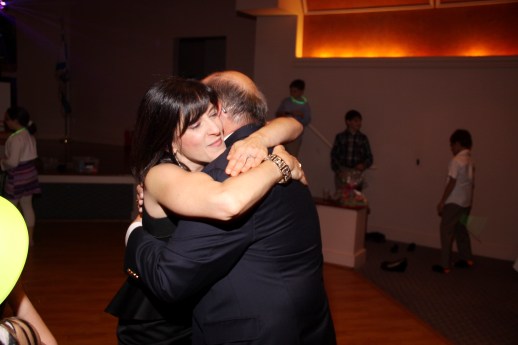
Dancing with my father… the last dance we would ever share.

In the past two months, three personal essays appeared on this blog that, while each uniquely told, shared a tragic connection. The authors had all lost a close family member to suicide.

But their stories also shared something else in common: They were among the most read, shared and commented Washington Post stories on the days they published.

And while the comments section on a news story can sometimes give voice to the worst of humanity, the people who came to comment on these stories used the space to give thanks, to offer support and to share their own experiences with suicide loss. The three authors, Amy Marlow, Deborah Greene, and , by opening up about their own pain and their own fears and their own strengths, created a safe space for others to do the same…

To read the full article  go to The Washington Post

My family and I were estranged for six years. The reasons are complex, as are most families. But thankfully, the family ties that bind, though frayed & tattered, were never broken. It was Rosh Hashanah (The Jewish New Year) when our healing began. It was Yom Kippur (The Day of Atonement & Forgiveness) when we spoke for the first time. And it was Thanksgiving, when we were reunited for the first time.

I remember so well as my husband, the girls and I pulled into the driveway of my childhood home; my father came around to my side of the car. I stepped out of the car and we embraced. He cried, I cried, and we held one another so tightly. And, in that year, as I sat around the dinner table with my own beautiful family, my brother and his family, and my parents, I got to live out in full the truest meaning of Thanksgiving. Yes, we lost six years. We will never get those back. But our story did not end there. It was not the final footnote. And from our pain, our hurt, our anger and our journey through forgiveness, we grew stronger, better. We loved more fully, more honestly, more openly. We became strongest in the very places that had been broken.

Soon, it will be one year since my father’s suicide. It is a painful day for me and my family to contemplate. I feel as if I’ve lived a lifetime without him, and as though he left us only yesterday. Yes, I count my blessings daily and I have found laughter once again. Yes, I am present for my family and my friends, and I turn towards life each day. But the loss has forever altered me and I am still putting the pieces together. But I am so profoundly grateful that I got three and a half more years with my father. I am grateful for every memory that we made, every laugh that we shared, and for every time we said, “I love you.” And I am grateful that I found the courage to reach out in that first letter, that letter that opened the door to a future together, and allowed us to leave behind the hurt, the anger and the sadness that had touched our past.

Life can change on a dime. Mine did when I got the call that my father had taken his own life. I guess my message is, where you can, if you can, and however you can, find forgiveness. My father left this world knowing that I loved him. And I know that he loved me. That might not have happened. And I cannot even begin to imagine what that would have felt like.

Families will hurt us, disappoint us, frustrate us & wound us. Some of those things I know are truly unforgivable. But, if they are not, if they can be overcome, looked past or let go of, do it. I regret many things, and I regret deeply that I could not save my father from himself, from his pain, from the depression and anxiety that plagued him. But I do not have to live with the regret of words left unspoken, forgiveness left unoffered and love left unshared. And for that, for the 3 & 1/2 years I got with him, that my children got with him, and for the love that we shared, I am profoundly and wholly grateful. Forgiveness is a gift. Offer it to yourself. It may be one of the most precious and meaningful things you ever do.

me and aaron with folks

My brother Aaron, my mother, my father and me. The last time we would all be together.

This piece was also published on The Good Men Project

DSCN1020

My daughters with Grandma & Grandpa on a visit to Long Island.

I remember the first time that I heard my mother’s voice after I found out my father had taken his life. I was in the back of Whole Foods, where I had received the devastating news, sitting with my friend Pam. My husband was on his way to me. But I needed to speak to my mom. So, with my hands shaking and an endless flow of sobs and tears, I dialed the number to the house that my father and mother had shared for over forty years.

My mother answered, and as she recounted what had happened, we sat on the phone crying. And she said to me, “Deborah, I don’t want the girls to know how their grandpa died.” When I asked her why, she answered, “I don’t want them to think he didn’t love them enough to stay.”  We both knew that we could not keep this from them. And even more, that we could not possibly grieve a lie. That wasn’t truly what my mother wanted. Her words were not born of shame, but rather the fear that my children would come to see their beloved grandfather as selfish, or perhaps see themselves as “not enough” to keep him here.

I promised my mother, vowed to her in fact, that I would make sure my daughters knew how much their grandpa loved them. I would tell them the truth about how he died, but I would remind them of all that they meant to him in life. Somehow I would find the words to impart all of that.

My husband took me home. And soon after, our daughters began to arrive from school. They did not all come home at the same time. And while it would have been easier to say the words only once, and to have them all together, it was obvious to them, as they walked through the door, that something was terribly wrong. There would be no postponing the conversation.

It began with my middle daughter, who was beaming because, on that same day, she had gotten her braces taken off. A friend had picked her up from school so that she could keep the appointment. And it fell to us to rob her of that smile, as we told her that her grandpa had taken his life.

Then we told our oldest, and finally our youngest.

We began each conversation with the reminder that I promised my mother I would give. “You know how much Grandpa loved you, right? He loved you so much and he was so proud of you.” As the words came out, the expressions on each of my daughters’ faces quickly changed. They could see in our faces that something was wrong. We then tried to gently frame the harsh news that we were about to deliver, “You know how much Grandpa has been struggling these last months? You know he has been dealing with depression and anxiety.” And before we could go further, my daughters knew. The tears and cries spilled out as they asked if their grandpa had killed himself. And my husband & I had to answer them with the hardest truth they would ever have to take in. “Yes. Grandpa took his life early this morning. He’s dead.” And then through my sobs I said the same thing my brother had said to me that morning when he told me of our father’s suicide: “I’m sorry. I’m so, so sorry.”

The cries and screams that escaped from my children’s mouths, cries that came from a deep & primal place, will never leave me. They are forever seared into my memory. And I can say with certainty, that those were the hardest and most painful words that I have ever spoken to my children. Everything about them felt wrong. And time hasn’t changed that.

My daughters know that their grandfather died by suicide. They do not know the details of his death. They don’t need to and they are not ready for the imagery that my brother, my mother and I struggle with. They also know that their grandfather loved them very much, and that he died of an illness. It’s taken time for them to reach that place of understanding, and it doesn’t mean they don’t still struggle at times. We talk about it openly. They know that there is no right or wrong way to grieve this loss. But just as we did from the moment we shared that painful truth, we face and process the loss honestly.

Before my father was buried, each of my daughters wrote him a letter. They told him how much they loved him. They told him how much they would miss him and they shared their own personal memories and feelings. And in each of their letters they told their grandpa that they were not angry at him. They offered their forgiveness.

Those letters were placed in my father’s casket. He was laid to rest with their words and their love for all eternity. They know the truth. Their Grandpa died of an illness. It was not a reflection of his love for them. He loved them fully, deeply and wholly. That is his enduring legacy. His suicide is the final footnote that they must live with, but it is not & never will be the whole story.

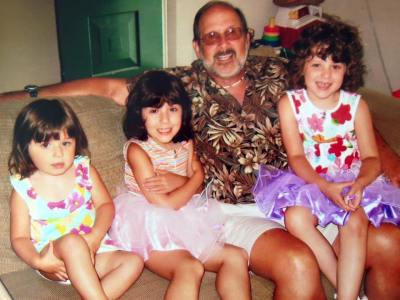
Grandpa and his granddaughters

Grandpa & The Greene Girls


This post has been republished on The Mighty